Invisalign Teeth Straightening Therapy Aftercare
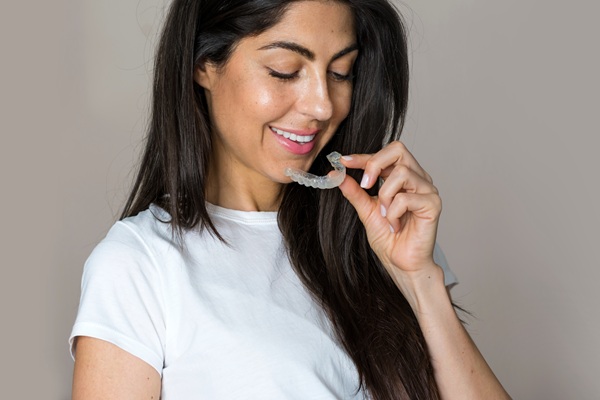
Invisalign® is a great treatment method to undergo when needing to straighten crooked teeth or correct bite issues. However, life after Invisalign® is what excites most people! What is important to know is that afterward, it is crucial to abide by a few things in order to maintain the results that come from the treatment. Continue reading to find out more about retainers and aftercare tips from a general dentist.
Life after Invisalign®
Below is a quick overview of what to expect after Invisalign® treatment is complete. This information may be helpful to individuals who are preparing to finish their treatment process.
Retainers
As soon as Invisalign® treatment is complete, most general dentists will recommend the use of a retainer. Retainers help to keep the teeth in the proper position, thus maintaining the results that came from the treatment process. Just like with the aligners, retainers too are custom-created to fit the patient's upper and/or lower arch.
Retainers are typically offered in two different ways. The most common type of retainer to follow Invisalign® treatment is one that is removable and only worn at night while the patient is asleep. This type of retainer has a small metal bar that goes directly over the teeth. A small piece usually sits in the middle for stability. Although this type of retainer is most common, it is not always the most efficient. Because it is removable, patients often forget to wear it or become less disciplined with it. Long term, this can have an effect on the teeth. The teeth can eventually shift back into the position they were in prior to Invisalign® treatment.
The other type of retainer that may be recommended after Invisalign® treatment is one that is cemented into place permanently. The general dentist will still have the piece custom-made; however, it will literally be attached to the backside of the teeth. It is not removable unless by a dentist and allows for the maintenance of permanent results.
Oral hygiene
After any type of dental work, good oral hygiene is necessary. However, with Invisalign®, it is especially important because the teeth have shifted into their proper position. This means that old spaces or gaps may be closed, and the teeth may require different attention. It is crucial that proper flossing and brushing is done each day as this will help ensure that the teeth remain in great shape, making the most of the results from Invisalign®.
General dentists recommend brushing twice a day or after every meal with a soft to medium bristled toothbrush. Additionally, flossing and rinsing at least once a day will help keep the gums in healthy shape.
Find out more about Invisalign®
When considering Invisalign®, it is a good idea to also have an understanding of the aftercare, as stated above. For further inquiries about the treatment process and life afterward, it is best to consult directly with a general dentist. To learn more or to get scheduled for an appointment, reach out today.
Request an appointment here: https://emergencydentistswhittier.com or call Whittier Emergency & Implant Dentist at (562) 600-2757 for an appointment in our Whittier office.
Check out what others are saying about our dental services on Yelp: Invisalign in Whittier, CA.
Related Posts
Dental implants provide a reliable, long-term solution for replacing missing teeth, but not every patient qualifies for treatment immediately. Several oral health and medical factors can affect whether implant placement is appropriate at the time of evaluation. The goal of a general dentist is to identify these concerns and develop a treatment plan that improves…
Understanding how clear aligners work is the first thing someone needs to do when considering these popular teeth straightening options. Because there are a few different straightening options to choose from due to updated dental technologies, those needing straightening services have a few choices. Clear aligners are one of the popular options people are choosing.Understanding…
Endodontics treatment, which is the treatment of the tooth's inner pulp and structures, is one of the most efficient ways to save decaying or damaged teeth. Many individuals, however, get anxious when they learn they need it. This is mostly due to the widespread misconception that undergoing endodontic treatment is unpleasant. It is incorrect —…
Choosing to invest in cosmetic dentistry is an exciting decision that can change how you feel about your appearance and social interactions. A bright smile creates a strong first impression and helps you feel more at ease during important life moments. Modern dental advances have made it easier than ever to reach your cosmetic smile…
